
Preparing for a fire and safety interview requires more than memorizing definitions. Employers look for candidates who understand risk assessment, emergency response, prevention strategies, and compliance with safety standards. Whether you are applying for a Fire Safety Officer, HSE Executive, or Safety Supervisor role, being ready for common interview questions can significantly improve your chances of success.
Below are key fire and safety interview questions, along with guidance on how to approach them effectively.
1. What are the main causes of fire in the workplace?
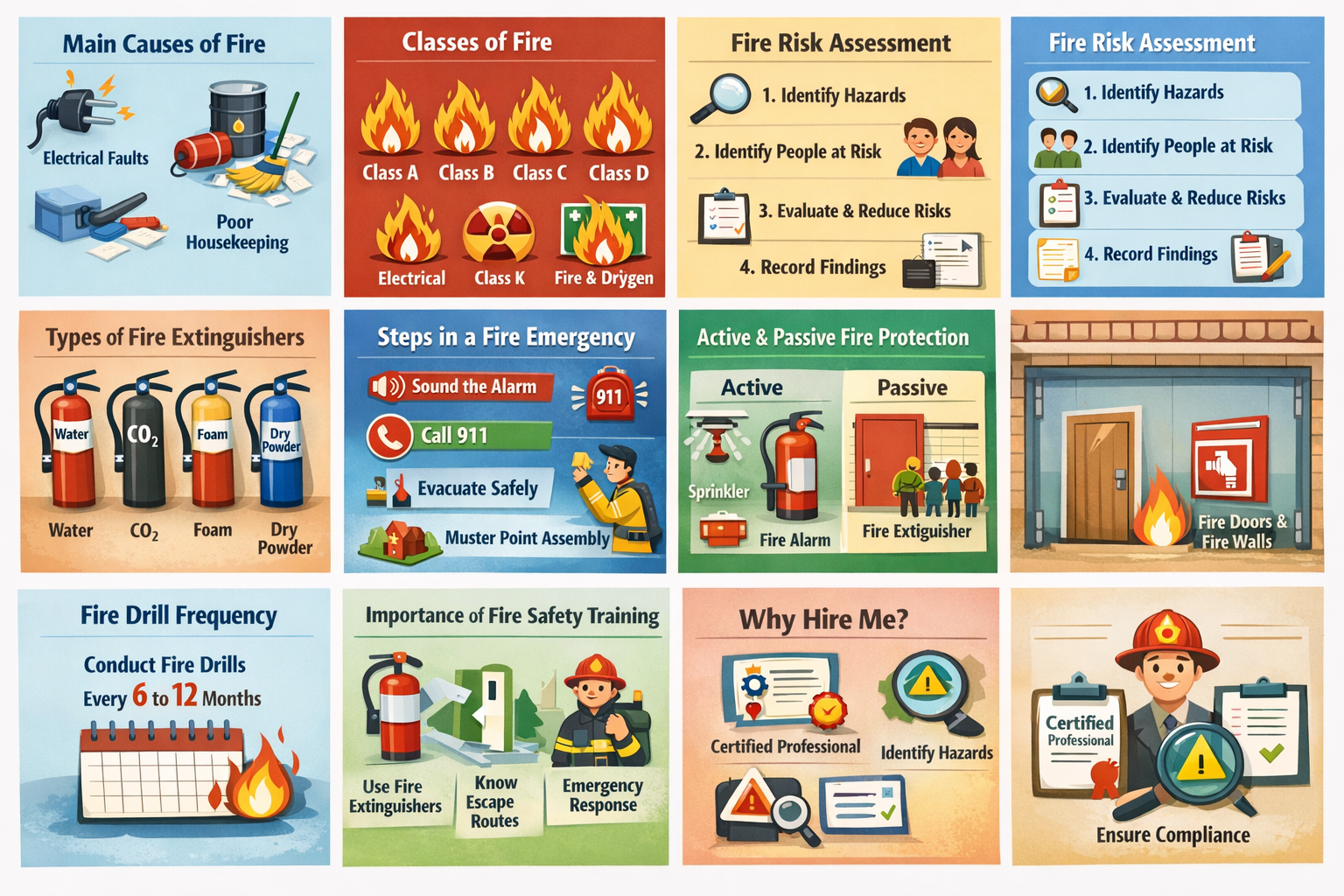
Interviewers ask this to test your practical knowledge. Common causes include electrical faults, overheating equipment, flammable materials, poor housekeeping, and human negligence. A strong answer should also mention the “fire triangle” – heat, fuel, and oxygen – and explain how removing any one element can prevent a fire.
2. What are the different classes of fire?
You should clearly explain the fire classifications:
- Class A – Ordinary combustibles (wood, paper, cloth)
- Class B – Flammable liquids (petrol, diesel, paint)
- Class C – Flammable gases
- Class D – Combustible metals
- Electrical fires – Energized electrical equipment
- Class K/F – Cooking oils and fats
Employers expect you to match each class with the correct fire extinguisher type.
3. How do you conduct a fire risk assessment?
This is a common technical question. Your answer should include:
- Identifying fire hazards
- Identifying people at risk
- Evaluating and reducing risks
- Recording findings
- Reviewing regularly
Mentioning documentation and periodic inspection shows professionalism.
4. What types of fire extinguishers are used in industries?
Explain common extinguisher types such as water, foam, CO₂, dry powder, and wet chemical. Clarify their applications and limitations. For example, CO₂ is ideal for electrical fires, while foam works well for flammable liquids.
5. What steps should be taken during a fire emergency?
Your answer should follow emergency response protocol:
- Raise the alarm
- Inform emergency services
- Evacuate safely
- Use the appropriate extinguisher only if trained
- Assemble at the designated muster point
Interviewers want to see calm decision-making and adherence to procedure.
6. What is a fire safety management system?
This question evaluates your understanding of structured safety practices. A good response includes policy development, employee training, inspection schedules, maintenance of fire protection systems, emergency planning, and compliance monitoring.
7. What are passive and active fire protection systems?
Active systems require action to function, such as sprinklers, fire alarms, and extinguishers. Passive systems help contain fire, such as fire-rated walls, doors, and coatings. Demonstrating knowledge of both indicates strong technical awareness.
8. How often should fire drills be conducted?
Fire drills should be conducted regularly, typically every 6 to 12 months depending on company policy and local regulations. You can also mention that drills help evaluate response time and identify gaps in evacuation planning.
9. What is the importance of fire safety training?
Training ensures employees understand hazards, know evacuation routes, operate fire extinguishers safely, and respond quickly in emergencies. It reduces panic, property damage, and loss of life.
10. Why should we hire you for this fire safety position?
This behavioral question allows you to highlight your experience, certifications, attention to detail, and commitment to safety culture. Focus on your ability to identify hazards, ensure compliance, and promote continuous improvement.
Finally
Fire and safety interviews test both theoretical knowledge and practical application. Employers look for candidates who can prevent risks, respond effectively in emergencies, and ensure regulatory compliance. Strong preparation, confidence, and up-to-date knowledge make a major difference in securing a position.
For professionals aiming to move beyond basic safety roles and qualify for higher-paying international opportunities, upgrading your credentials is essential. Advanced certifications aligned with globally recognized standards can significantly enhance your profile.
If you’re serious about building a rewarding career in fire safety, consider enhancing your expertise through an advanced-level Highfield International fire safety course. With industry-focused training and internationally respected certification, you can strengthen your technical skills, increase your employability, and open the door to well-paid fire safety job opportunities worldwide.
Safety Courses
Related Fire Safety Courses

Diploma in Fire & Industrial Safety Management